> For the complete documentation index, see [llms.txt](https://docs.widgelix.com/llms.txt). Markdown versions of documentation pages are available by appending `.md` to page URLs; this page is available as [Markdown](https://docs.widgelix.com/get-started/devices/settings.md).
# Settings
The **Settings** tab allows you to configure connectivity, add public links, load debugging data, generate reports, set time zone, and set geo-location.
**Connectivity:**
To receive or send data from or to the device, you need to add and configure the network server to which the device belongs.
In the **Connectivity** section, click on the light blue area displaying a **disconnected adapter** icon and the text '**Not Configured**'.
The **Network Server** modal box opens. Select the network server from the list where your device is registered.
In the **Uplink** section, toggle the **Secure** button switch to turn it on.
{% hint style="info" %}
The **API Key** text box is initially empty but it will be generated for your device after you click on the **Save** button.
{% endhint %}
Click on the **Save** button.
Your network server is now shown in the **Connectivity** section.
To view the API key, simply click on the network server listed under the **Connectivity** section.
The **Network Server** modal box opens, and you can now see the API key associated with your device in the API Key text box.
Copy the **API key** by clicking on the **Copy** button. You will need it when configuring the connectivity for Widgelix on your network server.
**Report:**
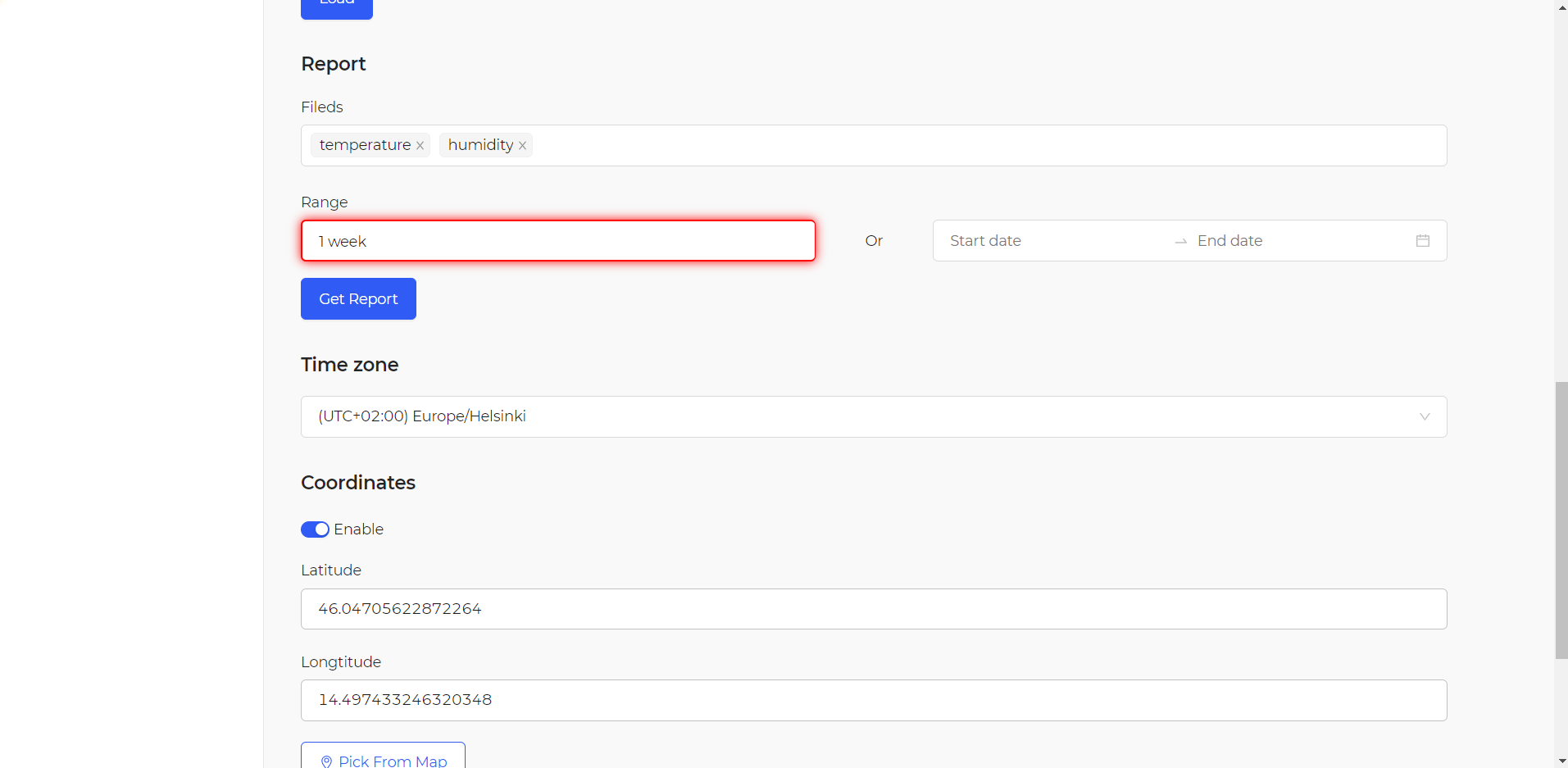
You can download the recorded values for the preferred data fields as a **CSV** (Comma Separated Values) file.
To add data fields, click on the **Fields** text box and select each field one by one.
For data filtering, choose the desired timeframe using one of the following options:
* Click on the **Range** text box and select a predefined timeframe from the list. If the desired timeframe is not available, you can manually type a range, such as '3 days' for example.
* Define a custom date range by selecting the **start date** and **end date** from the date pickers.
Click on the **Get Report** button.
The report will be downloaded as a CSV file.
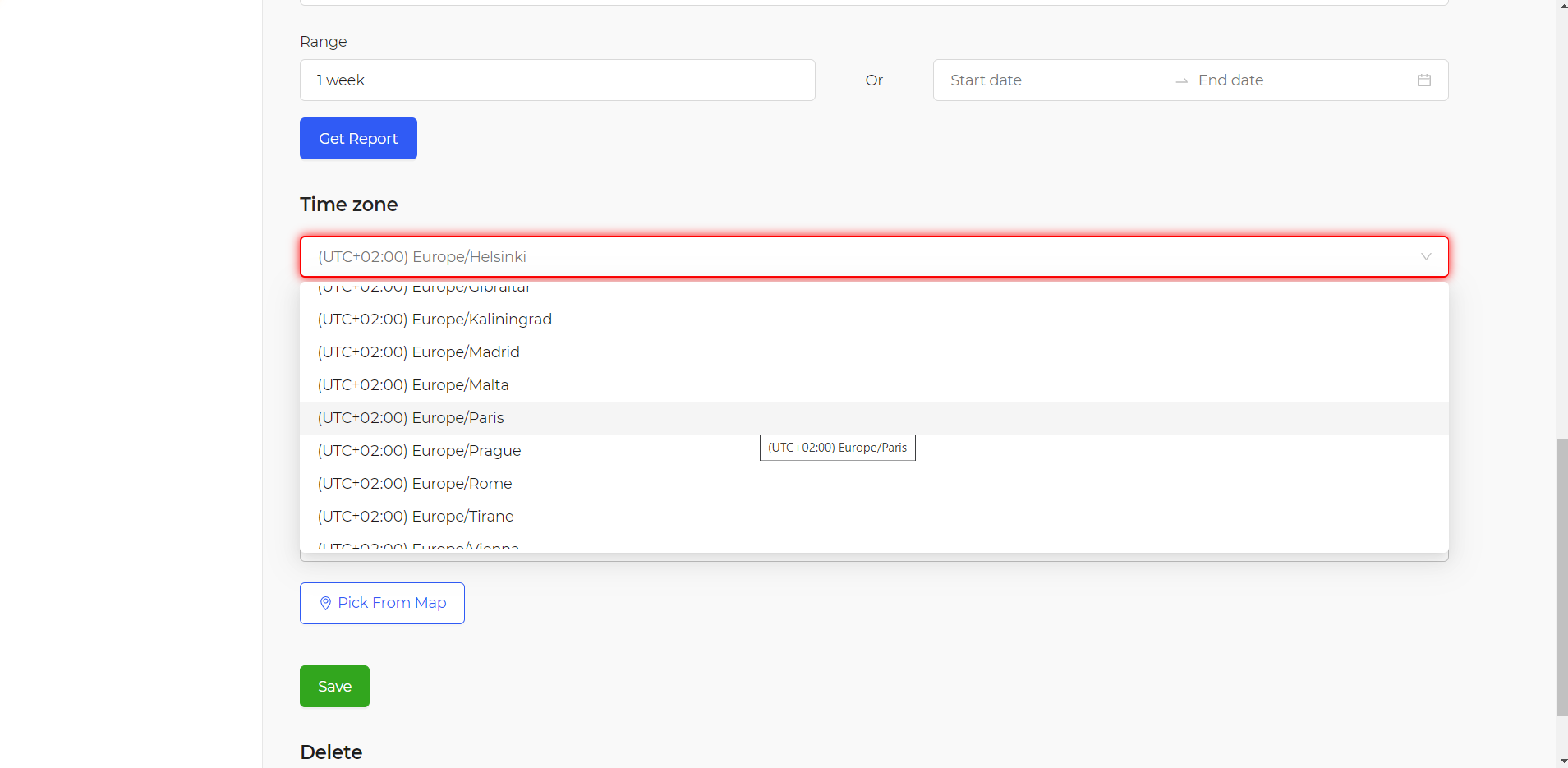
**Time zone:**
Click on the drop-down and select a time zone from the list that is applicable to the geolocation of your device.
The time zone automatically updates and applies to all devices of that device type.
**Online Threshold:**
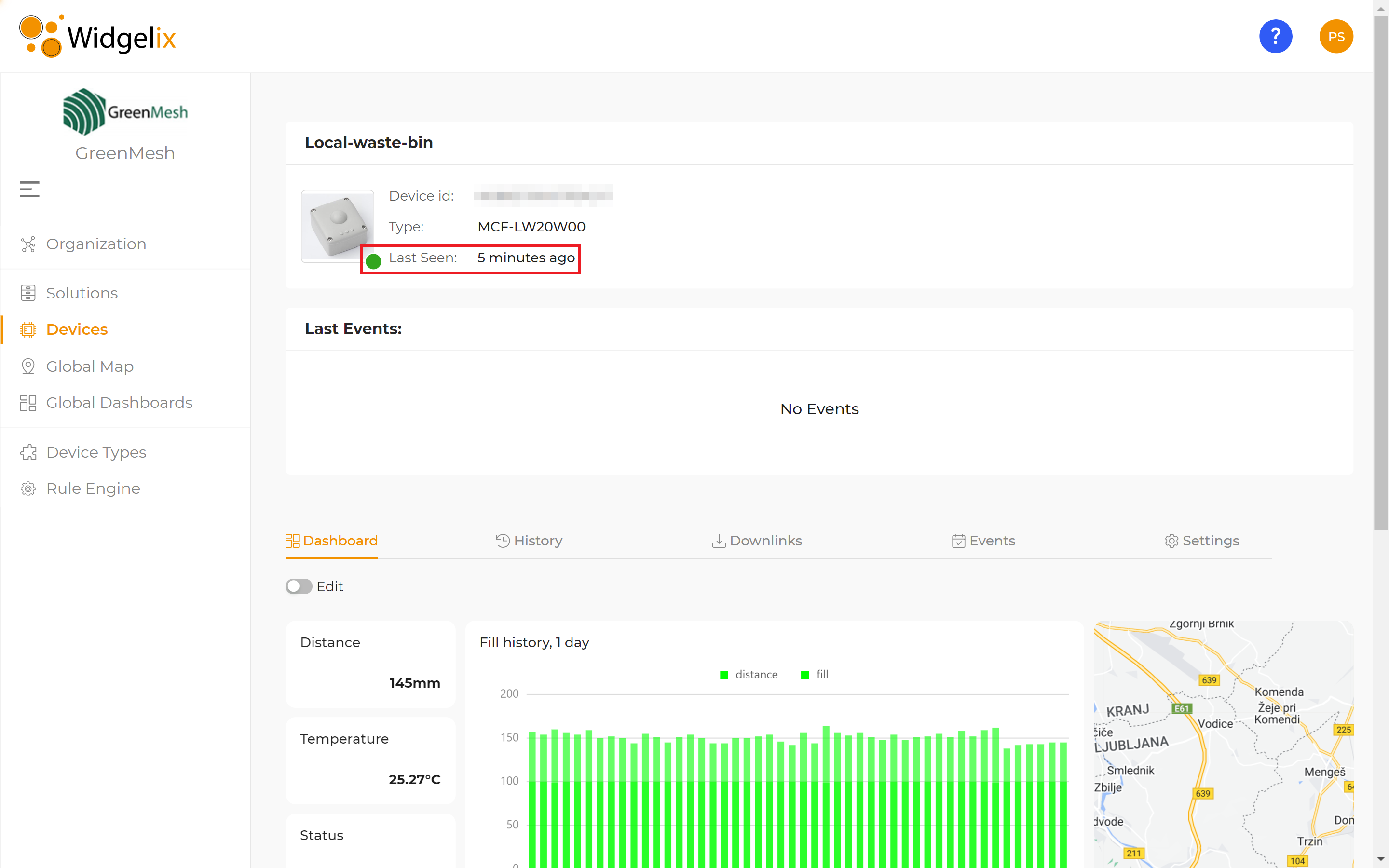
The device status (online/offline) can be determined based on whether an uplink is received from the device within the defined time period.
If an uplink is received within the defined time period, a **green dot** will display alongside the device image, and the **elapsed time** between the last uplink time and the current time will be shown, for example, `Last Seen: 5 minutes ago`.
If there is no uplink received within the defined time period, a **red dot** will display alongside the device image, and the device status will be displayed as `Last Seen: never`
Select one of the following predefined timeframes from the **dropdown text box** under the **Online Threshold**.
* `1 minute`
* `1 hour`
* `1 day` - this is the default timeframe.
* `1 week`
* `1 month`
You can also type a custom time frame in the dropdown text box, for example, `2 minutes`.
**Coordinates:**
The **Coordinates** section is only visible if you have enabled and set the geolocation of your device during its creation. To view the Coordinates section if it is not visible, toggle the **Enable** button.
You can add or update the existing coordinates by either directly typing them in the **Latitude** and **Longitude** text boxes or choosing them from the map by clicking the **Pick From Map** button.
Click on the **Save** button to apply the changes to the device.
{% hint style="info" %}
When you update the coordinates, they will be applied only to the particular device, not to the device type.
{% endhint %}